
Why Does Your AC Compressor Shut Off After 2-3 Minutes?Answers for Residents of Thiensville, Wisconsin
Professional Services Heating, AC & Electric Repair
Last updated: June 22, 2026
Key Points
- When your AC compressor shuts off after just 2–3 minutes, HVAC technicians call this short cycling — a normal cooling cycle should run 15–20 minutes to reach your desired temperature.
- The four main causes of short cycling: electrical problems, airflow obstructions, refrigerant issues, and component wear and tear.
- According to the U.S. Department of Energy, short cycling forces your AC to work harder, consuming more energy and accelerating wear on the compressor — one of the most expensive components to replace.
- Some causes — a tripped breaker, thermostat issues, or blocked vents — are DIY-resolvable with a basic inspection.
- Other causes — low refrigerant, bad contactors, dirty condenser coils, and duct buildup — require a licensed HVAC technician.
- Annual spring tune-ups prevent most of the issues that cause compressor short cycling before they start.
- Contact Professional Services Heating, AC & Electric Repair for expert AC repair and maintenance throughout Thiensville, WI.
A cooling cycle begins as it usually does. You can feel air moving through the vents and hear the soft hum of the indoor unit. Then, the HVAC system shuts off just as suddenly as the cycle began.
"Why does my AC compressor shut off after 2-3 minutes?" you wonder aloud. Sudden compressor stoppages often mean you need AC repair in Thiensville, WI. Professional Services is here to provide answers to your above question and service your system.
What Is the Air Conditioner Compressor, and What Does It Do?
If your ductwork and refrigerant lines serve as your HVAC system's circulatory system, then the air conditioner compressor acts as the heart. It pumps refrigerant through the lines by putting it under intense pressure. Then, it forces the refrigerant to release the heat it collected throughout its previous cycle so it can trap more heat.
An overheating compressor cannot effectively pressurize and pump refrigerant, which depletes your air conditioner's cooling capabilities. "So why does my AC compressor shut off after 2-3 minutes?" Let's explore the details further below.
Why Does My AC Compressor Shut Off After 2-3 Minutes?
When your compressor shuts off during an active cooling cycle, HVAC technicians refer to this as short cycling. A short cycle means that your system didn't run for the entire 15 to 20 minutes. Therefore, your home or business in Thiensville, Wisconsin, doesn't reach your preferred temperature.
Numerous HVAC issues can cause short cycles, but what about the compressor specifically? It often boils down to the following:
- Electrical problems — your compressor might have lost power for one reason or another
- Airflow obstructions — dirt buildup or foreign objects trapped in the ducts, vent openings, or equipment keep air from freely circulating
- Refrigerant issues — you might also have a problem that prevents sufficient refrigerant from flowing through the lines
- Component wear and tear — each part affects the one connected to it; if something that works alongside the compressor sustains damage, then the compressor might too
Most compressor concerns require professional attention from an HVAC technician in Thiensville, Wisconsin. However, a few don't, and you can probably manage those on your own.
Identifying Small Reasons for Air Conditioner Compressor Failure
Some property owners can resolve their compressor problems by themselves. All it takes is a brief inspection to uncover the following problems:
- Thermostat issues — if your thermostat is working incorrectly, it could send inaccurate signals to the system; wipe any dirt from the wires and reset the device to see if this resolves the problem
- Electrical shorts — make sure your air conditioner can access the electricity required to fuel cycles; check the breaker box for partially flipped switches and reset them
- Minor airflow restrictions — look for furniture and other belongings blocking each air vent; switch out your dirty air filter if you haven't in a while
You can also clean around the indoor and outdoor equipment, moving stored items at least two feet away from them. This gives them extra space to expel heat and circulate air.
Bigger Issues That Require Assistance From a Local HVAC Technician in Thiensville, Wisconsin
"I followed those suggestions, and I'm still having problems. Why does my AC compressor shut off after 2-3 minutes?"
If the issue persists, it's time to contact an air conditioning service in Thiensville, Wisconsin. The problem requires professional attention and might include one of the following:
- Low refrigerant levels — if there isn't enough refrigerant, your compressor can't work as it should and will struggle whenever your system runs
- Bad contactors — electrical contactors keep the electricity flowing to the system; a rusty or loose contactor will limit the power that makes it to the capacitor and other components
- Filthy coils — the condenser coils work hand-in-hand with the compressor; dirty condenser coils mean excessive heat retention and poor performance
- Nasty interior ductwork — your duct network may have dusty buildup that secretly prevents free, clean air from flowing
You can prevent many of these issues through regular tune-ups. Your air conditioner needs one every spring before you turn it on for the warm season. Your technician will search for and address the above and other minor mechanical failures. Schedule your annual AC maintenance with Professional Services before the warm season arrives.
Key Takeaways
When your AC compressor shuts off after 2–3 minutes, it's short cycling — and every premature shutdown means your Thiensville home isn't reaching your preferred temperature. The four root causes are electrical problems, airflow obstructions, refrigerant issues, and component wear. Start with the DIY checks: reset tripped breakers, inspect the thermostat, replace a dirty filter, and clear any vent obstructions. If those don't resolve it, the cause is likely low refrigerant, bad contactors, dirty condenser coils, or duct buildup — all requiring a licensed HVAC technician. Annual spring tune-ups catch and prevent most of these issues before they become costly repairs. Contact Professional Services Heating, AC & Electric Repair for expert AC compressor diagnosis and repair throughout Thiensville, WI.
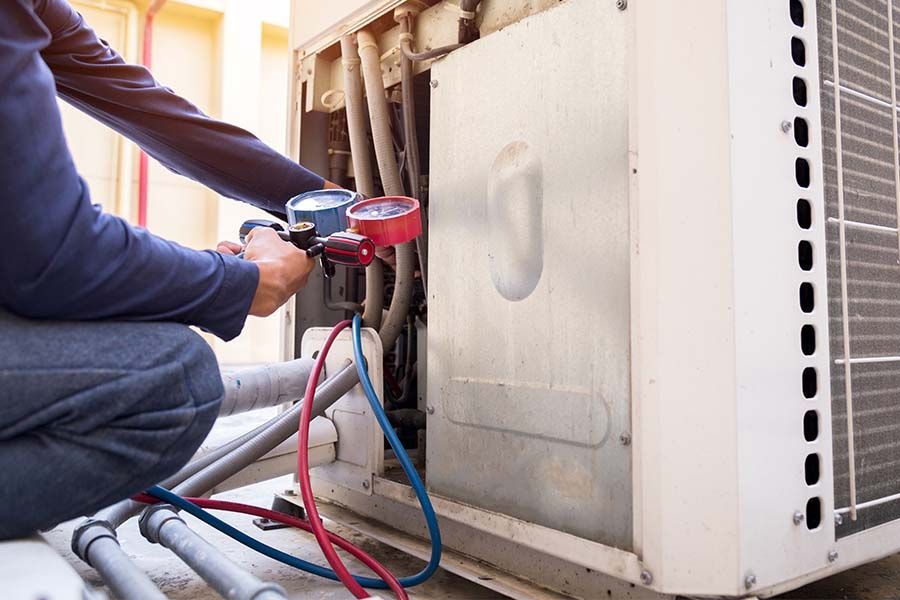
Depend on Professional Services To Fix and Maintain Your Air Conditioner in Thiensville, Wisconsin
"Why does my AC compressor shut off after 2-3 minutes? Let's see what Professional Services has to say."
Reach out to our dependable HVAC technicians in Thiensville, Wisconsin. Contact Professional Services today for fast, reliable AC repair and maintenance throughout the area.
You might also like