
AC Repair in Saukville, WI
Saukville sits at a crossroads in Ozaukee County — close enough to Lake Michigan to feel its humidity, positioned along the Milwaukee River corridor, and surrounded by the kind of working-class residential neighborhoods where homes have been well-used for decades and equipment has been running longer than most manufacturers plan for. When something goes wrong with the AC here, it usually needs more than a quick patch.
Professional Services Heating, AC, and Electric Repair has been serving homeowners across Ozaukee County with thorough, honest AC repair work. We show up on time, diagnose the full problem, and fix it right. Our technicians are certified and experienced with the range of equipment ages and home styles found throughout Saukville — from postwar bungalows near the village center to the modest ranch homes and split-levels that filled in around them through the 70s and 80s.
If your home is not cooling the way it should, we are the team to call.
What We Cover on a Saukville AC Repair Call
We do not arrive at a Saukville home looking only at the symptom that prompted the call. The housing stock here — much of it older, with equipment that has been repaired and patched over the years rather than replaced — rewards a thorough look at the whole system. That is how we find the real problem and avoid repeat service calls.
Our technicians handle refrigerant leak detection and repair, recharging systems to proper operating pressures, replacing capacitors and contactors, servicing or replacing blower and condenser fan motors, clearing and inspecting condensate drain lines, and diagnosing compressor and electrical faults. We check coil cleanliness and condition, measure refrigerant pressures, verify thermostat and control wiring, and assess duct system airflow to confirm the equipment is delivering what it is producing.
In Saukville's older homes, ductwork is frequently a contributor to cooling problems. Systems that were retrofitted for central air in homes originally built without it often have duct layouts that were never optimal, and decades of settling and temperature cycling loosen connections and collapse flex runs in ways that quietly drain system performance year after year.
Signs Your Saukville Home Needs AC Repair
Saukville's position near the Milwaukee River and within range of Lake Michigan's summer humidity means the air here carries more moisture than many homeowners account for when evaluating how their AC is performing. A system that seems to be running fine may be working harder than it should just to stay even. These are the signs it is time to call.
- Warm or room-temperature air blowing from vents
- System running without ever reaching the set temperature
- Energy costs noticeably higher than prior summers
- Ice forming on refrigerant lines or the outdoor unit
- New sounds — banging, squealing, or buzzing — during operation
- Air inside the home feeling heavy and damp
- Water or staining near the indoor air handler
- Rooms far from the air handler that never cool properly
Older homes in Saukville with long duct runs to back bedrooms or upper floors are especially prone to that last symptom. When a system is already under strain from humidity and age, the rooms furthest from the equipment are always the first to show it.
Why Saukville Homes Put Extra Demand on AC Equipment
Three things converge in Saukville that collectively make it a harder environment for residential AC equipment than the county averages suggest. The first is the Milwaukee River, which runs along the western edge of the village and contributes the same kind of valley-trapped humidity that affects Grafton — moist air that pools overnight and does not clear until midmorning, giving systems little recovery time between cooling cycles.
The second is the age of the housing stock. A substantial share of Saukville's homes were built between the 1940s and 1980s, and many of them are running equipment that was installed in the 1990s or early 2000s — systems now pushing 20 to 25 years of operation. At that age, multiple components are simultaneously approaching end of life, and the combination of a high-humidity environment with aging equipment creates the conditions for clustered failures. One part goes, and others that were just holding on follow within a season or two.
The third factor is insulation. Homes from that era were built to standards that look modest by current code, and walls and attics that do not retain conditioned air well make an already-stressed system work harder to maintain any given indoor temperature. The AC runs longer, components wear faster, and the gap between how the system performs and what the homeowner expects widens every summer.
A Service Call on the East Side of Saukville
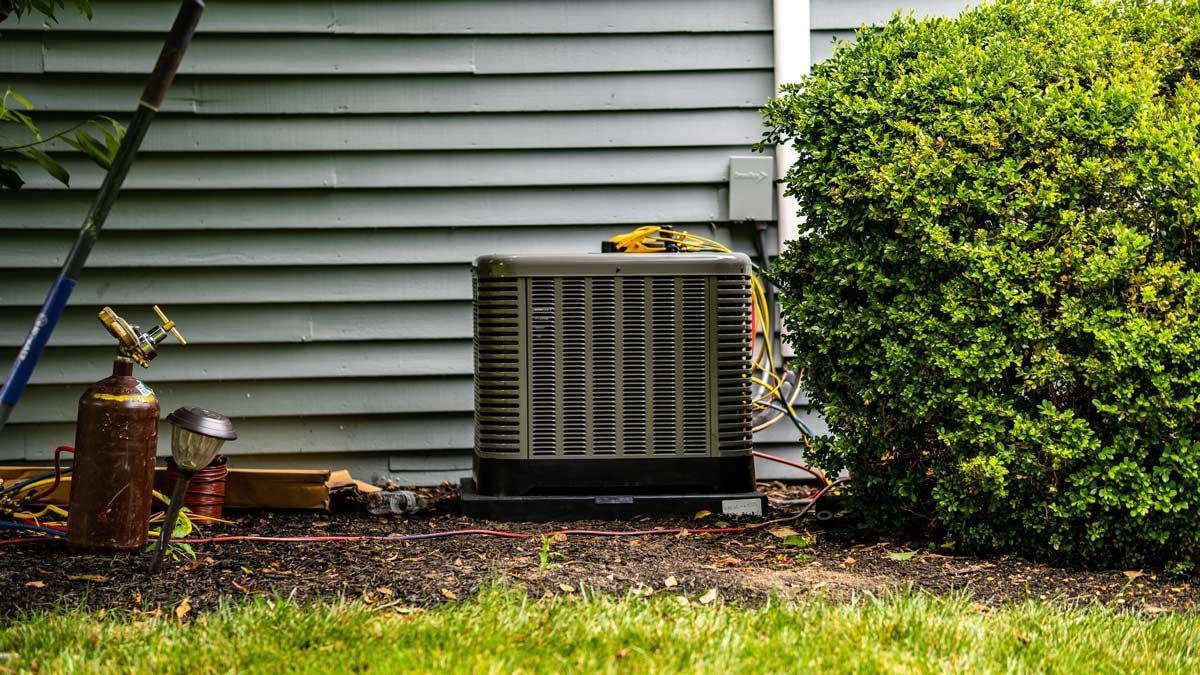
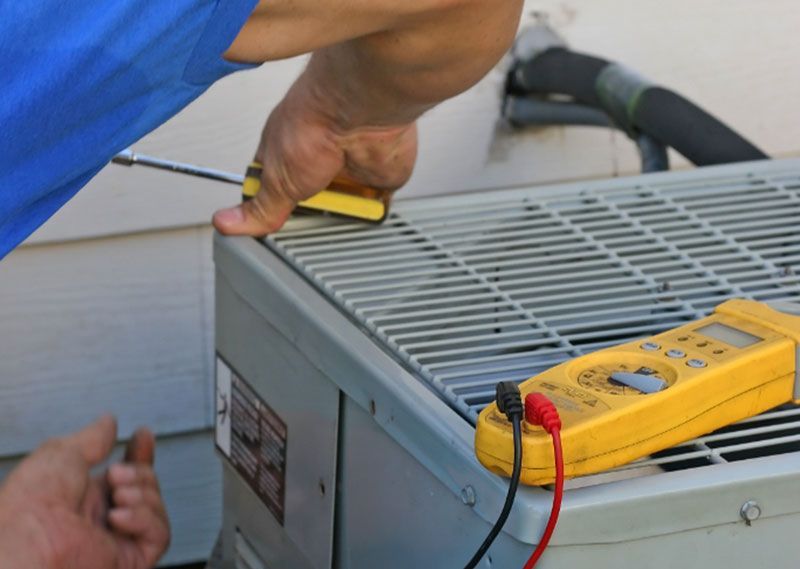
We got a call one morning in early August from a homeowner named Mike whose system had been limping along for most of the summer. His ranch home on the east side of the village had a system that was nearly 22 years old, and he had been putting off a service call hoping it would make it through one more season.
Our technician found a failing run capacitor that had reduced compressor efficiency significantly, combined with an evaporator coil so fouled with dust and debris that airflow through the indoor unit had dropped well below design levels. Neither problem alone would have fully explained the symptoms, but together they had cut the system's effective cooling output roughly in half while it continued drawing close to full power — which explained the high energy bills Mike had been seeing all summer without understanding why.
We replaced the capacitor, cleaned the coil, and did a full electrical inspection given the system's age. Everything else checked out well enough to justify continuing to run it. Mike said he had assumed the system just needed to be replaced and was relieved to hear otherwise. We enrolled him in a maintenance plan and flagged the unit for close monitoring, giving him the best realistic chance of getting another season or two out of it before replacement becomes unavoidable.
Why Saukville Homeowners Choose Professional Services Heating, AC & Electric Repair
Saukville is a community that appreciates straight talk and honest work. We do not upsell, we do not replace parts that do not need replacing, and we do not leave until the job is done right. Here is what homeowners here consistently tell us they value about working with Professional Services Heating, AC, and Electric Repair.
- 24/7 emergency availability
- Honest repair-vs-replace assessments
- Technicians familiar with older home systems
- Clear pricing before any work begins
- Maintenance plans for aging equipment
- One team covering HVAC, plumbing, and electrical