
AC Repair in Belgium, WI
Belgium sits at the edge of Lake Michigan, and summer here is not just hot — it is heavy. The combination of heat and lake-driven humidity puts residential air conditioning systems under sustained stress that homeowners in drier inland areas simply do not experience. When your system stops keeping up, Professional Services Heating, AC, and Electric Repair is ready to respond.
Our certified technicians serve Belgium and the surrounding Ozaukee County area with honest diagnostics, reliable repairs, and straightforward communication. We work on all central air systems, ductless mini-splits, and heat pumps, and we do not leave until the problem is solved and verified.
If your home is not cooling the way it should, do not wait it out. In a climate like Belgium's, a struggling system rarely improves on its own.
What Our Belgium AC Repair Calls Actually Cover
Every repair visit starts with a full system diagnostic, not just a look at whatever symptom you called about. That approach is how we catch the secondary issues that would otherwise send you back to the phone two weeks later.
We repair and replace failed capacitors and contactors, locate and seal refrigerant leaks before recharging to proper levels, service or replace blower motors and condenser fan components, and resolve compressor faults and electrical failures that prevent systems from starting. Condensate drain lines that have backed up and begun causing water damage inside walls or ceilings get cleared and inspected as part of the visit.
Belgium's older housing stock means we also frequently find ductwork that was added to homes not originally built for central air. Those systems often have sizing and sealing problems that force the AC to work harder than it should. We identify and address those issues when they are contributing to the problem.
Signs Your Belgium Home Needs AC Repair
Lake Michigan keeps humidity elevated across Belgium through most of June, July, and August, and that persistent moisture load means warning signs in your AC system can appear gradually rather than all at once. Knowing what to watch for makes the difference between catching a repair early and facing a full breakdown on the hottest day of the year. Common signs include the following.
- Warm or tepid air from vents
- Unit running nonstop without cooling
- Sudden spike in energy bills
- Ice on refrigerant lines or the outdoor unit
- Knocking, squealing, or grinding sounds
- Musty smell when the system runs
- Standing water near the indoor air handler
- Thermostat calls for cooling but nothing happens
Any of these symptoms in a high-humidity environment like Belgium deserves prompt attention. The longer a compromised system runs under lakeshore conditions, the faster wear accumulates on already-stressed components.
Why Lakeshore Conditions Wear Out AC Systems Faster
The western Lake Michigan shoreline creates a microclimate that is unlike anything found just ten or fifteen miles inland. Onshore winds carry saturated air directly into Belgium neighborhoods from spring through late summer, and that moisture does not just make the air feel heavier — it actively affects how hard your air conditioner has to work to do its job.
An AC system removes heat and moisture simultaneously. When the outdoor air is already dense with humidity, the evaporator coil has to work overtime on the latent heat load — the energy required to pull moisture out of the air before it can even begin lowering the temperature. That extended effort translates directly into longer run cycles, higher amperage draw on motors and compressors, and faster deterioration of components that were rated for average conditions, not sustained lakeshore demand.
Homes on or near the bluff face the most direct exposure, but the effect extends well into the village. Mid-century homes that were retrofitted with central air in later decades compound this problem with ductwork that was never sized for modern cooling loads. The result is a system working at the edge of its capacity on a routine summer afternoon.
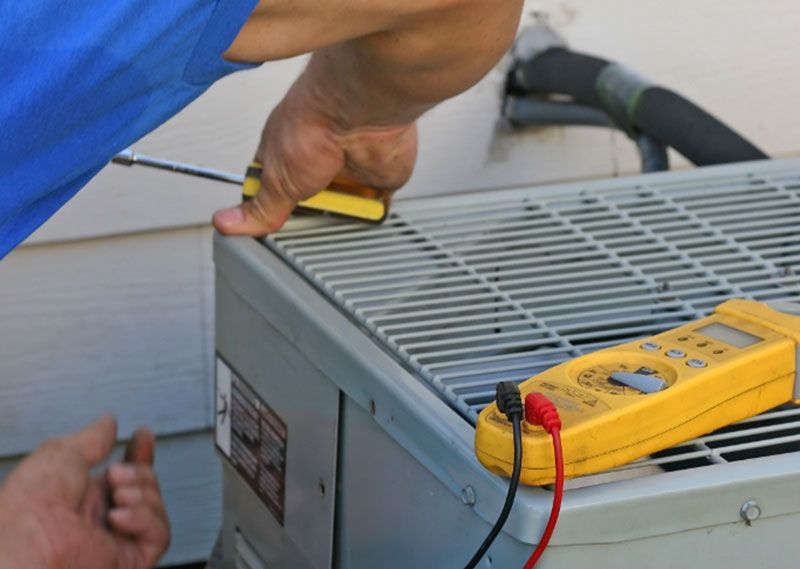
A Call We Made in Belgium
On a Thursday afternoon in late July, we heard from a homeowner named Sandra whose house near the lakeshore had been slowly warming for three days. She had chalked it up to the heat wave, but by the time the thermostat read 81 degrees with the system running continuously, she knew something was wrong.
Our technician found a refrigerant leak at a corroded fitting on the evaporator coil — a failure pattern we see in older systems that have been exposed to years of salt-tinged lake air. The low refrigerant charge had caused the coil to ice over, which blocked airflow almost entirely and left the system circulating warm air through the house while consuming full power. We repaired the fitting, allowed the coil to thaw, recharged the system, and confirmed proper operation before leaving.
Sandra mentioned she had noticed the house feeling slightly less cool than usual for the past couple of summers but had not acted on it. That slow decline is typical of a gradual refrigerant leak, and catching it earlier would have prevented both the coil icing and the uncomfortable stretch of days before she called. We enrolled her in a maintenance plan to keep that kind of creeping problem from going unnoticed again.
Why Belgium Homeowners Call Professional Services Heating, AC & Electric Repair
In a small lakeshore community, the companies people trust are the ones that have earned it one job at a time. Here is what homeowners in Belgium tell us matters most when they choose Professional Services Heating, AC, and Electric Repair.
- 24/7 emergency service
- Certified technicians on every call
- Transparent pricing before work starts
- Maintenance plans for lakeshore homes
- HVAC, plumbing, and electrical under one roof
- Honest assessments, no pressure