Do Air Purifiers Help With Mold Removal in Port Washington, WI?
Professional Services Heating, AC & Electric Repair
Key Points
- Air purifiers do help with mold — they reduce airborne spore concentrations and improve indoor air quality — but they treat the symptom, not the source; the underlying moisture problem must be addressed separately.
- According to the U.S. Environmental Protection Agency, mold can begin growing on wet materials within 24 to 48 hours of water exposure — making rapid response to plumbing leaks, flooding, or high humidity essential for Port Washington homeowners.
- In Port Washington and Ozaukee County, Lake Michigan's proximity and Wisconsin's high-humidity summers create elevated ambient moisture conditions that accelerate mold growth in basements, bathrooms, and poorly ventilated spaces.
- The most effective approach combines three layers: UV air purification (kills biological spores), HEPA filtration (traps particles as small as 0.3 microns), and whole-home dehumidification (removes the moisture that allows mold to grow in the first place).
- Mold spores that an air purifier doesn't capture will settle on surfaces — disturbing those surfaces (cleaning, walking, opening doors) re-releases them into the air, which is why air purification alone cannot solve a mold problem.
- Strategic air purifier placement matters — kitchens, bathrooms, basements, and other high-humidity areas are where spore concentrations are highest and where purifiers deliver the most benefit.
- Contact Professional Services for expert UV air purification, HEPA filtration, and whole-home dehumidifier installation throughout Port Washington, WI and Southeastern Wisconsin.
Mold spores linger in every environment, including homes — and spores don't always cause problems in this state. However, events like plumbing leaks and floods trigger growth.
This rapid airborne spread can pose serious health issues and property damage risks. So do air purifiers help with mold? Yes, the installation can improve your indoor air quality post-water damage, as you'll see below. However, there are some important things to know before you implement UV air purification services in Port Washington, WI.
The Problem With Mold in Port Washington Homes
Mold can be a significant health hazard in high concentrations — especially for people with sensitivities or respiratory illnesses. Breathing in too many spores can trigger symptoms like shortness of breath and persistent coughing. Certain mold strains also cause lung infections and intense allergic reactions.
General symptoms of mold exposure may include:
- Wheezing
- Itchy eyes
- Runny nose
- Skin rashes
Prolonged mold exposure could also affect your mental health. For example, unchecked mold growth in a home could trigger or worsen depression and anxiety. An effective airborne allergen-reduction method is vital to your physical and mental well-being — which is why people consider air purifiers.
Why Port Washington and Ozaukee County homeowners face elevated mold risk: Port Washington's location on the western shore of Lake Michigan creates a moisture-rich microclimate that is more favorable to mold growth than inland Wisconsin communities. Lake effect humidity during summer months keeps ambient moisture levels elevated, particularly in basements and lower-level spaces where condensation on cool surfaces is common. Older homes in Port Washington's historic downtown and bluff neighborhoods frequently have less ventilation than newer construction, allowing humidity to concentrate in enclosed spaces. The combination of high ambient moisture and older building stock makes indoor air quality management a year-round priority for many homeowners in this area.
What Impact Does an Air Purifier Have on Mold?
Do air purifiers help with mold removal in Port Washington? Yes — purifiers can have a profoundly positive impact on your home's indoor air quality!
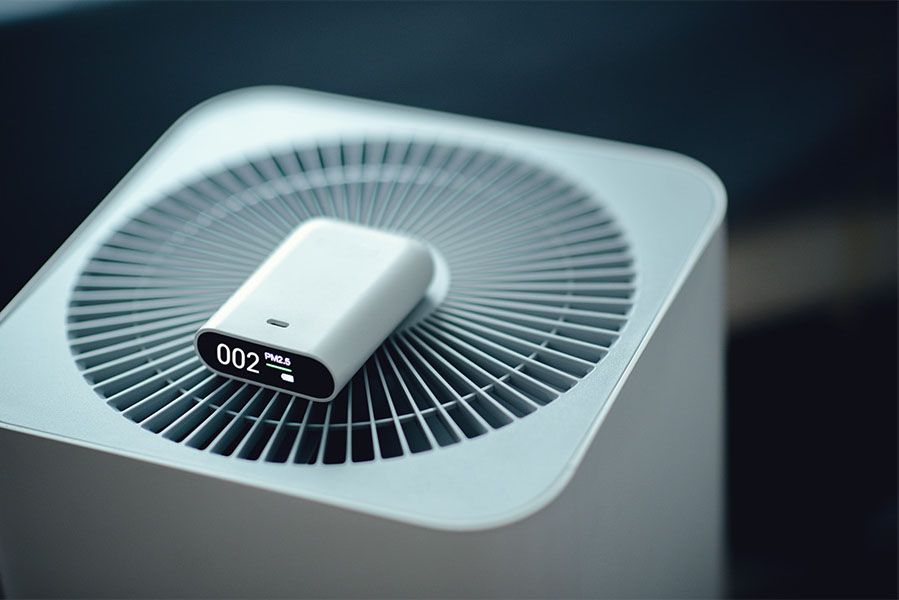
Air purification systems work by drawing in air and forcing it through filters, which trap particles to release cleaner air into the room. Still, purifiers won't remove all or even most of the spores in your property's air supply. The microscopic spores that mold releases into the air can still settle on surfaces around your house — which you may unintentionally disturb and make airborne again.
Air purification systems can address some spores and other allergens circulating in your breathing air inside your home. They won't solve your entire mold problem at its source.
What air purifiers actually do — and don't do — for mold: An air purifier running continuously in a mold-affected space will reduce the concentration of airborne spores in that room's air supply. This is genuinely beneficial — lower spore concentrations mean less exposure for household members, fewer symptoms for those with sensitivities, and slower secondary spread to other surfaces. What the purifier cannot do is remove mold that has already colonized surfaces (walls, grout, insulation, drywall), reduce the humidity that allows that colony to keep producing spores, or prevent new spores from entering the air the moment you disturb the affected surface. Think of it as filtering the water coming out of a leaking pipe rather than fixing the pipe — helpful, but incomplete without addressing the source.
Air Purifiers and HEPA Filtration: A Powerful Combination Against Mold Spores
How can you ensure healthy indoor air quality? Combine air purification with HEPA filtration — experts recommend using these air cleaners together for maximum protection.
High-Efficiency Particulate Air filters are excellent at trapping microscopic airborne particles that a regular filter might miss, including contaminants as small as 0.3 microns. Since mold spores are usually between one and five microns, HEPA filters combat excessive spore levels in indoor air supplies. No air cleaner or filtration system will completely rid your property of pollutants — but combining methods can make indoor air substantially purer.
UV air purification adds a critical third layer: HEPA filters trap spores physically, but UV air purification systems go further by using ultraviolet light to neutralize biological contaminants — including mold spores, bacteria, and viruses — before they can circulate through your home's air supply. For Port Washington homes dealing with active mold concerns, a system that combines HEPA filtration with UV treatment addresses both the particulate and biological aspects of indoor air contamination. Professional Services installs UV air purification systems and comprehensive filtration solutions throughout Ozaukee County — contact us to discuss the right combination for your home's specific air quality profile.
Tips for Maximizing Your Air Purification System's Effectiveness
Do air purifiers help with mold issues? They do — but it's crucial to use these systems strategically. Here are some simple tips to maximize your air cleaners' effectiveness in your Port Washington home:
Use strategic air purifier placement: Kitchens, bathrooms, basements, and other areas with high humidity and poor ventilation are prone to mold growth. Place your air purifiers in these spaces for optimal effectiveness.
Improve air circulation: Air circulation helps purification systems work efficiently. Leave doors open so that your purifiers can easily tackle spores from each room.
Keep humidity low: Mold thrives in damp environments. If your home has high humidity, consider incorporating dehumidification supports. Whole-home humidifiers and dehumidifiers can maintain healthier moisture levels — between 30% and 50%.
Clean or replace filters regularly: Air filters only work well when they aren't clogged. Replace or clean these mediums according to the manufacturer's guidelines. Professional Services provides HVAC filter replacement service throughout the Port Washington area for homeowners who prefer a professional handle this on a scheduled basis.
For Port Washington basements specifically: Wisconsin basements are among the most mold-prone spaces in any home — cold concrete walls create condensation surfaces when warm humid air contacts them in summer, and older homes frequently lack vapor barriers or adequate drainage. A dehumidifier in the basement running year-round is often the single most impactful investment a Port Washington homeowner can make for mold prevention. Pair it with an air purifier for active spore management and air duct cleaning to prevent duct systems from recirculating spore-laden air throughout the home.
Addressing Your Port Washington Home's Underlying Moisture Problem
Air purifiers with HEPA filters can help improve mold levels inside your Port Washington home. However, these systems won't address your property's fungal problem — they only help treat the symptom, which is poor indoor air quality.
To deal with excessive fungal growth, you must identify and treat mold at its source. For instance, mold from a plumbing leak will keep producing spores until you fix the leak and order remediation from a mold eradication professional.
The moisture source checklist for Port Washington homeowners: Before investing in air purification equipment, identify and eliminate active moisture sources. Common culprits in Port Washington homes include: slow plumbing leaks under sinks or behind walls (often undetected for months), condensation on basement walls and windows during humidity swings between Lake Michigan air and the home interior, inadequate bathroom exhaust ventilation (fan runs during showers but doesn't fully exhaust moisture before shutting off), and attic moisture from insufficient ventilation or ice dam damage during Wisconsin winters. A professional indoor air quality assessment can identify both the moisture sources and the appropriate air quality solutions — ensuring you address the problem at its root rather than managing symptoms indefinitely.
Key Takeaways
Air purifiers do help with mold in Port Washington, WI — they reduce airborne spore concentrations, improve symptom outcomes for sensitive household members, and slow secondary surface contamination. However, they treat the symptom (airborne spores) rather than the source (moisture and surface mold). The EPA confirms mold can begin growing within 24–48 hours of water exposure, making rapid moisture response critical. The most effective indoor air quality strategy for Port Washington's moisture-rich Lake Michigan microclimate combines three layers: UV air purification (neutralizes biological contaminants), HEPA filtration (traps particles down to 0.3 microns, well below the 1–5 micron range of mold spores), and whole-home dehumidification (targets the 30–50% RH range that prevents mold growth). Strategic placement in basements, bathrooms, and kitchens maximizes purifier effectiveness. Filter maintenance and duct cleaning prevent recirculation of trapped spores. Addressing the underlying moisture source — plumbing leaks, condensation, inadequate ventilation — is non-negotiable for lasting results. Professional Services provides comprehensive indoor air quality solutions throughout Port Washington and Southeastern Wisconsin.
Contact Professional Services in Port Washington for Premium Air Quality Solutions
Do air purifiers help with mold? They certainly can — but it's best to combine air purification and strong filtration systems for thorough mold spore removal.
If your home needs indoor air quality improvements, Professional Services' top-rated HVAC company can help in Southeastern Wisconsin. We understand the importance of air duct cleaning, UV air purification, and air filtration to reduce airborne contaminants in Port Washington, WI. That's why we offer a wide range of services — from HVAC filter replacements to dehumidifier installations.
You might also like